End-to-End Delta PLC + HMI + SCADA Projects
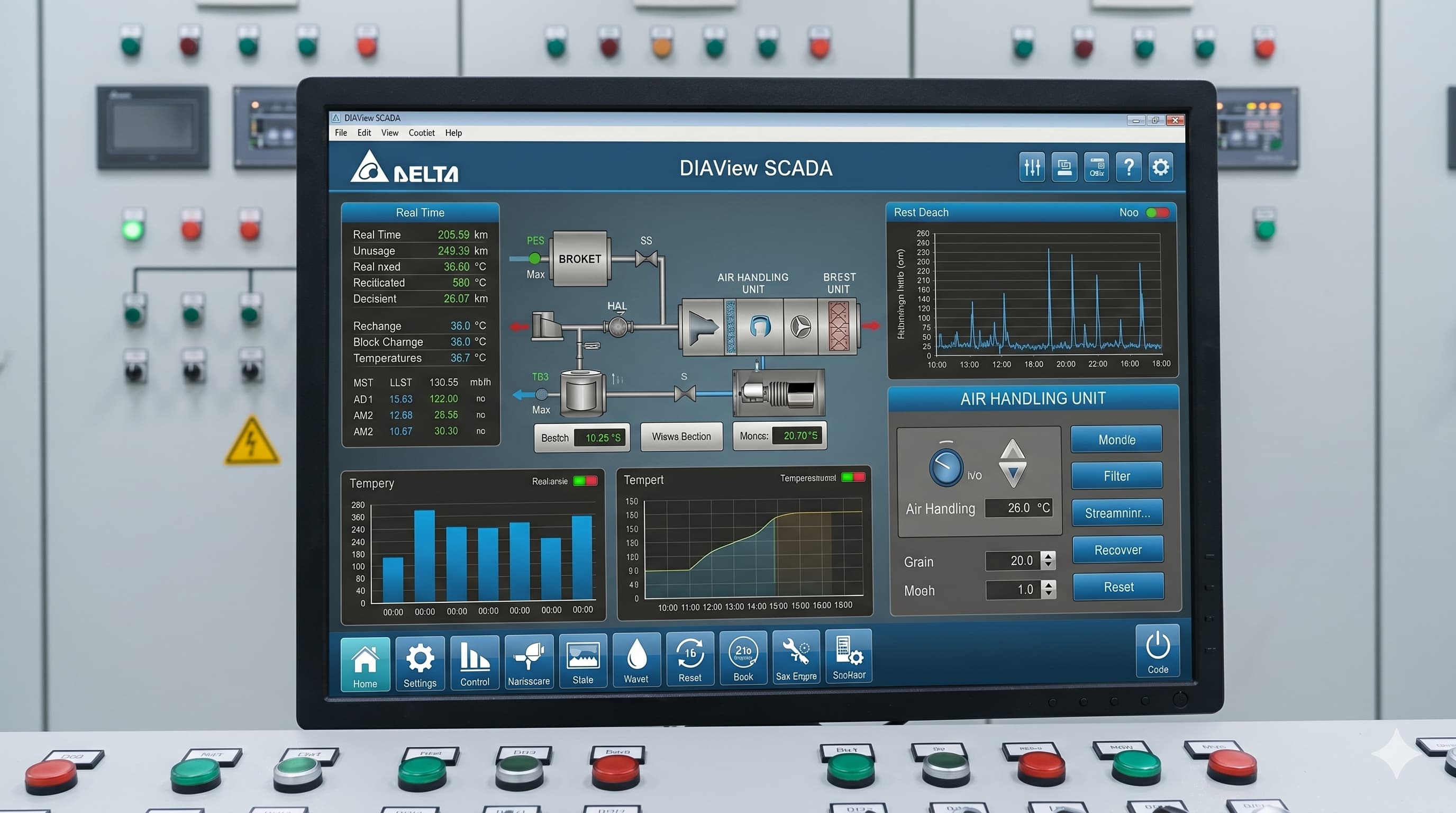
Complete conveyor automation walkthrough integrating Delta PLC, HMI panel and SCADA software.
Read More

Complete conveyor automation walkthrough integrating Delta PLC, HMI panel and SCADA software.
Read MoreBuild production-grade SCADA dashboards, configure trends, and log historical data with SCADA software.
Read MoreMaster HMI tag linking, alarm screens, and multi-page navigation patterns.
Read MoreConfigure Modbus TCP/IP communication, networking, and remote I/O on the Delta PLC.
Read MoreHardware setup, PLC software installation and your first ladder program on the Delta PLC platform.
Read MoreUnderstanding the key differences between PLC (Programmable Logic Controller), DCS (Distributed Control System), and SCADA systems is critical for anyone pursuing a career in industrial automation. We compare architectures, real-world applications, and career paths for automation engineers.
Read MoreComplete conveyor automation walkthrough integrating Delta PLC, HMI panel and SCADA software.
Read MoreBuild production-grade SCADA dashboards, configure trends, and log historical data with SCADA software.
Read MoreMaster HMI tag linking, alarm screens, and multi-page navigation patterns.
Read MoreConfigure Modbus TCP/IP communication, networking, and remote I/O on the Delta PLC.
Read MoreHardware setup, PLC software installation and your first ladder program on the Delta PLC platform.
Read MoreUnderstanding the key differences between PLC (Programmable Logic Controller), DCS (Distributed Control System), and SCADA systems is critical for anyone pursuing a career in industrial automation. We compare architectures, real-world applications, and career paths for automation engineers.
Read MoreMaster ladder logic programming on the Siemens PLC using PLC software. This step-by-step tutorial covers basic instructions, timer and counter logic, motor control circuits, and conveyor automation examples for industrial PLC programming.
Read MoreA detailed side-by-side comparison of Experion C300 DCS and DeltaV — two of the most widely deployed distributed control systems in process industries. Covers architecture, I/O handling, batch control, and integration capabilities.
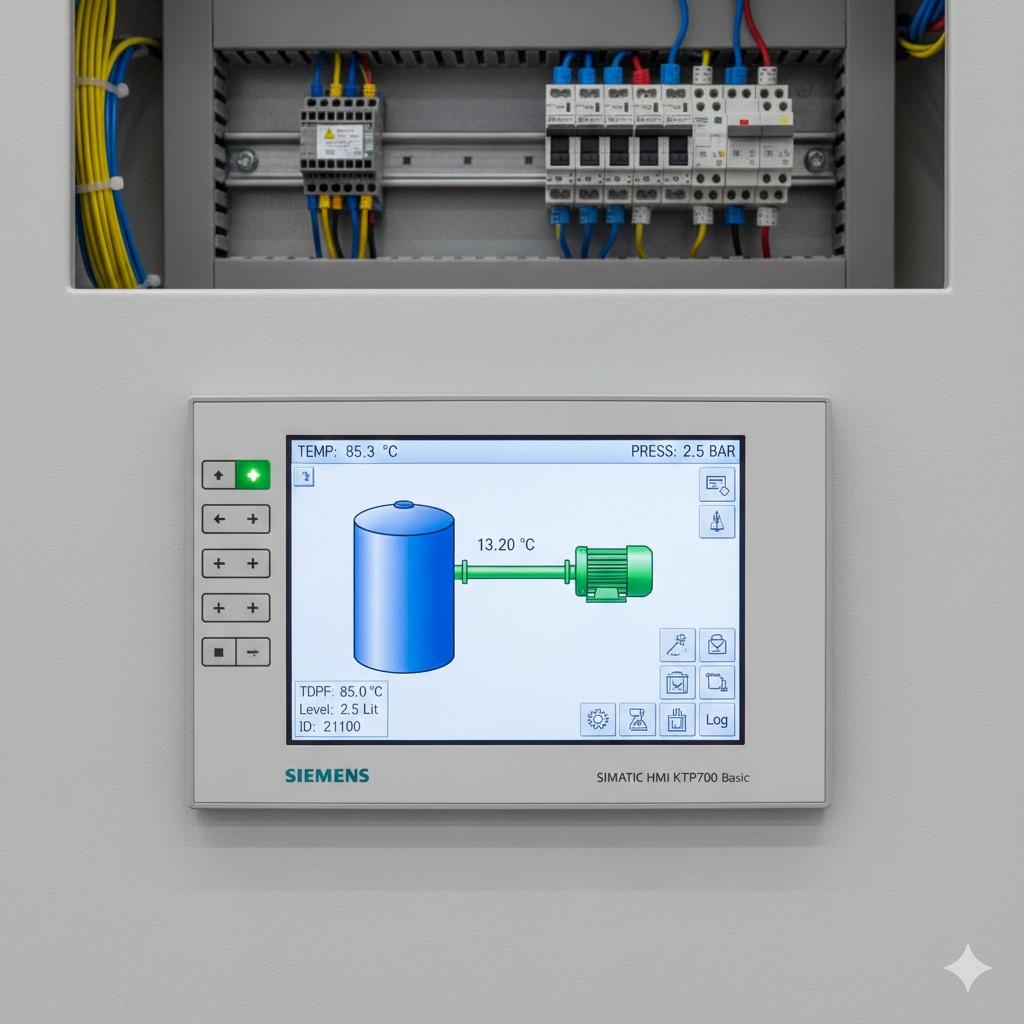
Read MoreLearn how to build a fully functional SCADA system from scratch using Siemens HMI runtime software. This project walkthrough covers HMI screen design, PLC tag mapping, alarm configuration, and real-time data monitoring for industrial automation.
Read MorePLC, SCADA, DCS, HMI and drive systems covered in our courses.


Clear answers to common questions about industrial automation, PLCs, SCADA, DCS and HMI systems.
Industrial automation uses control systems, sensors, software and machines to monitor or operate industrial processes with less manual intervention. PLCs, SCADA, DCS and HMIs are common parts of an automated system.
A PLC controls machines and discrete processes, SCADA supervises and visualizes equipment across a site, and a DCS coordinates continuous process control across a plant. They can work together in one automation system.
Current areas of development include Industrial IoT, edge computing, AI-assisted analytics, digital twins, collaborative robotics and stronger industrial cybersecurity. Their value depends on the process and the system they support.
Common IEC 61131-3 languages include Ladder Diagram, Function Block Diagram, Structured Text and Sequential Function Chart. Which one you use depends on the controller, project and maintenance requirements.
Start with electrical and control-system basics, then practise PLC logic, HMI screens, alarms and SCADA communication using simulation or supervised hardware. Explore Infercon Automation training courses.
An HMI gives operators a visual interface to monitor equipment, view alarms and trends, enter setpoints, and issue permitted commands to the control system.